
Radio doesn’t have a performance problem. It has a proof problem.
The pressure on radio to prove ROI to advertisers is real and it’s not going away. In a market trained by digital dashboards, “we know it works” is not a business case. It’s a belief. And belief doesn’t hold budget when an agency can open Google or Meta and see impressions, conversions, CPA, and trend lines on demand.
For too long, legacy Radio has watched hundreds of millions of dollars migrate to digital while the industry defaulted to reassurance: not-as-bad-as-you-might-think listener attrition, and the old comfort blanket – Radio Works! Meanwhile, younger-than-ever media buyers don’t debate it; they just move the money elsewhere.
From “Radio Works” to “Here’s the ROI.”
Validate – Audio Attribution exists to fix that gap, not with another pilot, not with another proprietary methodology that dies inside one station group, but with a scalable, privacy-safe attribution system that will become a shared standard for the industry.
This is not a test. It’s operational.
Most attribution products for radio get stuck at the same point: a promising test, a few anecdotal wins, then friction – inconsistent methodology, limited scale, unclear governance, and no way to make results comparable across markets.
Validate is built for real deployment: it plugs into how radio actually operates (traffic, streaming, campaign workflows), produces usable reporting, and is designed to scale beyond major metros. That matters, because the next phase of radio revenue doesn’t come from “a solution that works in Toronto or New York.” It comes from consistent measurement across the full market map.
If you’re serious about performance-based selling, you need a system that can live inside sales routines, not a science project that requires an analyst to explain it every time.
The industry doesn’t need “another tool.” It needs a standard.
Fragmentation is the credibility killer.
If every group walks into an agency with a different attribution method, different definitions, and different outputs, agencies default to the only rational response: ignore it – because they can’t compare it, can’t normalize it, and can’t operationalize it across buys.
A standard doesn’t mean everyone has to love the same dashboard. It means the market gets consistent definitions (what counts as an exposure, conversion, campaign, lift), comparable outputs (apples-to-apples across groups and markets), stable methodology (no “version-of-the-month” measurement), credible governance (clear separation between measurement and selling).
That’s the unlock: when measurement becomes comparable, radio stops being “the brand channel” you can’t prove and starts being a performance channel you can justify.
Radio isn’t an 8-minute medium. It’s a long-tail medium.
A lot of attribution approaches fail radio because they measure it like a banner ad: a short window, immediate response, tight correlation, and they call anything outside that window “not attributable.”
That’s not how radio works.
Radio drives action over time through repeated exposure, reach + frequency, and delayed conversion behavior. People hear something in the car. They search later. They visit later. They buy later.
Validate is built around that reality, using a longer attribution window that captures the delayed response curve radio actually produces not the short-window behavior digital platforms prefer because it’s easier to claim.
The outcome is simple: you stop undercounting radio’s impact and start reporting it in a way that aligns with how humans behave.
That long-tail reality creates a measurement requirement: you need a reliable “signal” of exposure and response that can be captured at scale, across markets, without forcing radio into digital’s short-window rules.
In practice, that often means using streaming-level data as part of the measurement engine not because streaming is radio, but because it’s the portion of audio delivery where time, device context, and response signals can be observed consistently.
And that’s exactly why the next question is unavoidable.
The hard question is the one agencies ask immediately: Isn’t streaming just a proxy?
That’s the correct skepticism and it’s exactly where radio measurement has historically gone off the rails. Streaming audiences aren’t a perfect mirror of over-the-air audiences. So if you’re using streaming-derived signals to model broader impact, you don’t get to hand-wave it. You need to be explicit about what data is being used, how calibration works, where confidence is high vs. low, and what guardrails prevent overstatement.
That’s why Validate’s approach is designed to be defensible. The multipliers and modeling aren’t guesswork, they’re derived from longitudinal, minute-by-minute comparisons between streaming behavior and measured audience patterns, with the goal of producing stable, repeatable estimates that correlate to real outcomes, not optimistic math that flatters the medium.
And methodology alone isn’t enough. Governance matters. Validate is operated by an independent third party, with separation designed to protect group data and reduce conflicts of interest. If this becomes a standard, the trust architecture has to be as strong as the measurement.
The next step is non-negotiable if agencies are going to treat this as currency: formal third-party validation auditability, documented methodology, and clear statements of what the system can and cannot claim. And the fastest proof that this isn’t theory is what’s happening in-market right now.
Proof is in the Adoption.
This isn’t theory, it’s an industry solution filling a real void in the market.
More than 50 stations are joining this cause in January alone, including Evanov (Toronto), Hubbard Communications (Cincinnati), Connoisseur Media (Chicago, San Francisco, Portland, and San Jose), and Cox Media (Tampa and Miami).
And results are pointing in one direction: when you can prove outcomes, clients stay in longer and spend more (2.19x client spend and campaigns that run 44 days longer on average).
What changes in the sales meeting.
Validate isn’t about “proving radio works” in a philosophical way. It’s about changing the client conversation from faith to math.
When a seller can show:
…radio becomes a defendable budget.
It becomes a performance line item, not a legacy habit.
That is the entire game. Not vibes. Not anecdotes. Proof.
The point.
Validate is here to do what radio has needed for a decade: give the market a consistent, scalable, credible attribution standard – one that reflects how audio works, not how digital platforms prefer to grade themselves.
If radio wants to keep (and win back) budget in a measurement-driven economy, it has to speak the language of modern marketers with a system they can compare, trust, and use at scale.
That’s what Validate – Audio Attribution is built to be.
Real Tools. Real Proof. Real Results.
Radio doesn’t have a performance problem. It has a proof problem.
The pressure on radio to prove ROI to advertisers is real and it’s not going away. In a market trained by digital dashboards, “we know it works” is not a business case. It’s a belief. And belief doesn’t hold budget when an agency can open Google or Meta and see impressions, conversions, CPA, and trend lines on demand.
For too long, legacy Radio has watched hundreds of millions of dollars migrate to digital while the industry defaulted to reassurance: not-as-bad-as-you-might-think listener attrition, and the old comfort blanket – Radio Works! Meanwhile, younger-than-ever media buyers don’t debate it; they just move the money elsewhere.
From “Radio Works” to “Here’s the ROI.”
Validate – Audio Attribution exists to fix that gap, not with another pilot, not with another proprietary methodology that dies inside one station group, but with a scalable, privacy-safe attribution system that will become a shared standard for the industry.
This is not a test. It’s operational.
Most attribution products for radio get stuck at the same point: a promising test, a few anecdotal wins, then friction – inconsistent methodology, limited scale, unclear governance, and no way to make results comparable across markets.
Validate is built for real deployment: it plugs into how radio actually operates (traffic, streaming, campaign workflows), produces usable reporting, and is designed to scale beyond major metros. That matters, because the next phase of radio revenue doesn’t come from “a solution that works in Toronto or New York.” It comes from consistent measurement across the full market map.
If you’re serious about performance-based selling, you need a system that can live inside sales routines, not a science project that requires an analyst to explain it every time.
The industry doesn’t need “another tool.” It needs a standard.
Fragmentation is the credibility killer.
If every group walks into an agency with a different attribution method, different definitions, and different outputs, agencies default to the only rational response: ignore it – because they can’t compare it, can’t normalize it, and can’t operationalize it across buys.
A standard doesn’t mean everyone has to love the same dashboard. It means the market gets consistent definitions (what counts as an exposure, conversion, campaign, lift), comparable outputs (apples-to-apples across groups and markets), stable methodology (no “version-of-the-month” measurement), credible governance (clear separation between measurement and selling).
That’s the unlock: when measurement becomes comparable, radio stops being “the brand channel” you can’t prove and starts being a performance channel you can justify.
Radio isn’t an 8-minute medium. It’s a long-tail medium.
A lot of attribution approaches fail radio because they measure it like a banner ad: a short window, immediate response, tight correlation, and they call anything outside that window “not attributable.”
That’s not how radio works.
Radio drives action over time through repeated exposure, reach + frequency, and delayed conversion behavior. People hear something in the car. They search later. They visit later. They buy later.
Validate is built around that reality, using a longer attribution window that captures the delayed response curve radio actually produces not the short-window behavior digital platforms prefer because it’s easier to claim.
The outcome is simple: you stop undercounting radio’s impact and start reporting it in a way that aligns with how humans behave.
That long-tail reality creates a measurement requirement: you need a reliable “signal” of exposure and response that can be captured at scale, across markets, without forcing radio into digital’s short-window rules.
In practice, that often means using streaming-level data as part of the measurement engine not because streaming is radio, but because it’s the portion of audio delivery where time, device context, and response signals can be observed consistently.
And that’s exactly why the next question is unavoidable.
The hard question is the one agencies ask immediately: Isn’t streaming just a proxy?
That’s the correct skepticism and it’s exactly where radio measurement has historically gone off the rails. Streaming audiences aren’t a perfect mirror of over-the-air audiences. So if you’re using streaming-derived signals to model broader impact, you don’t get to hand-wave it. You need to be explicit about what data is being used, how calibration works, where confidence is high vs. low, and what guardrails prevent overstatement.
That’s why Validate’s approach is designed to be defensible. The multipliers and modeling aren’t guesswork, they’re derived from longitudinal, minute-by-minute comparisons between streaming behavior and measured audience patterns, with the goal of producing stable, repeatable estimates that correlate to real outcomes, not optimistic math that flatters the medium.
And methodology alone isn’t enough. Governance matters. Validate is operated by an independent third party, with separation designed to protect group data and reduce conflicts of interest. If this becomes a standard, the trust architecture has to be as strong as the measurement.
The next step is non-negotiable if agencies are going to treat this as currency: formal third-party validation auditability, documented methodology, and clear statements of what the system can and cannot claim. And the fastest proof that this isn’t theory is what’s happening in-market right now.
Proof is in the Adoption.
This isn’t theory, it’s an industry solution filling a real void in the market. 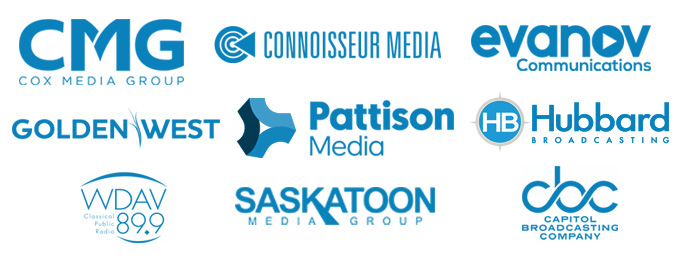 More than 50 stations are joining this cause in January alone, including Evanov (Toronto), Hubbard Communications (Cincinnati), Connoisseur Media (Chicago, San Francisco, Portland, and San Jose), and Cox Media (Tampa and Miami).
And results are pointing in one direction: when you can prove outcomes, clients stay in longer and spend more (2.19x client spend and campaigns that run 44 days longer on average).
What changes in the sales meeting.
Validate isn’t about “proving radio works” in a philosophical way. It’s about changing the client conversation from faith to math.
When a seller can show:
…radio becomes a defendable budget.
It becomes a performance line item, not a legacy habit.
That is the entire game. Not vibes. Not anecdotes. Proof.
The point.
Validate is here to do what radio has needed for a decade: give the market a consistent, scalable, credible attribution standard – one that reflects how audio works, not how digital platforms prefer to grade themselves.
If radio wants to keep (and win back) budget in a measurement-driven economy, it has to speak the language of modern marketers with a system they can compare, trust, and use at scale.
That’s what Validate – Audio Attribution is built to be.
Real Tools. Real Proof. Real Results.